
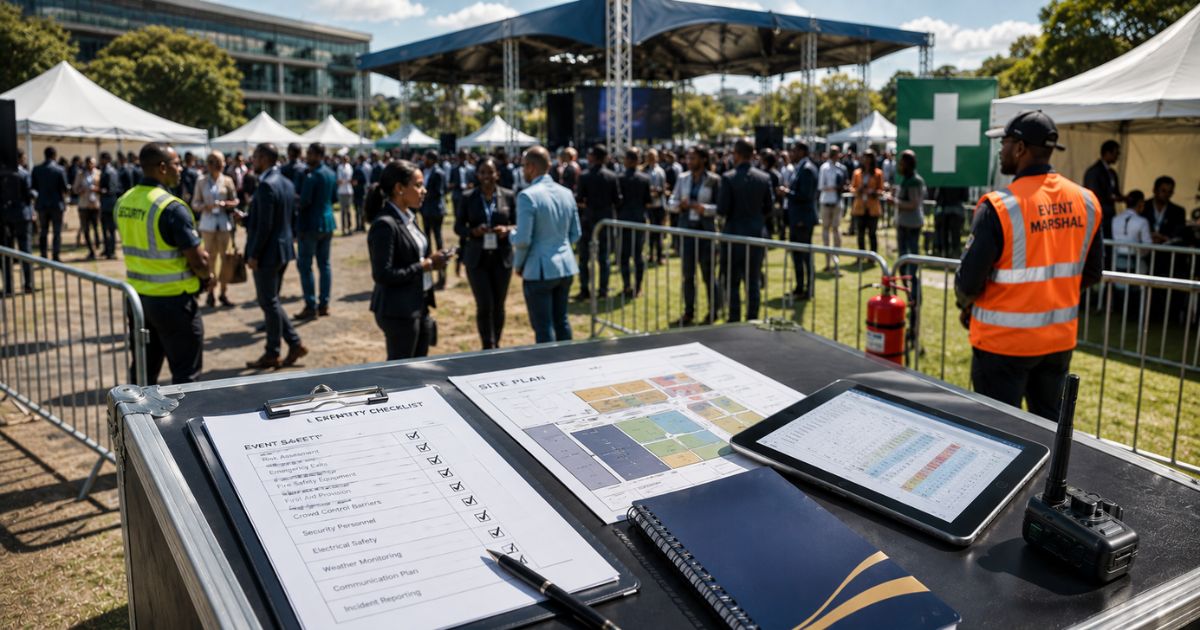
Whether you are planning a wedding, running a corporate function, or promoting a festival, an event brings people together in one place, and that always carries some risk. A guest could be injured, a venue could be damaged, or a contractor’s equipment could cause an accident. Event liability insurance exists to cover exactly that risk for the person or business responsible for the event.
This guide explains what event liability insurance South Africa covers, who needs it, whether it is compulsory, what it costs, and how to arrange cover quickly, even for a single one-off event.
Planning an event that needs liability cover?
Get an event liability insurance quote and protect yourself before the big day.
What Is Event Liability Insurance?
Event liability insurance is a policy that protects event organisers against claims from third parties, such as attendees, vendors, or venue staff, who are injured or whose property is damaged during the event.
It is closely related to public liability insurance, but with one key difference. Event liability is either a standalone specialist policy or a specific endorsement added to a public liability policy, and it covers a defined event or series of events over a fixed period, rather than a business’s ongoing year-round operations.
What Event Liability Insurance Covers
A typical event liability policy covers:
- Bodily injury to attendees, vendors, or other third parties present at the event.
- Damage to the venue or third-party property caused during the event.
- Legal defence costs arising from claims made against you as the organiser.
- Medical expenses for parties injured at the event.
- Cancellation or postponement cover is available as a separate add-on on some policies, rather than being included automatically.
What is typically excluded: intentional damage, and liquor liability where the organiser served alcohol irresponsibly, though whether liquor liability is included or excluded varies by insurer, so this is worth checking specifically. Terrorism is excluded unless specifically added, and incidents involving the organiser’s own employees fall under COIDA rather than event liability cover.
Event Organisers Who Need This Cover
Event liability cover is relevant to a wide range of organisers, including:
- Corporate event organisers and companies hosting staff functions
- Wedding and private function planners
- Concert and festival promoters
- Sports event organisers
- Conference and exhibition organisers
- Community and charity event organisers
- Schools and educational institutions hosting public-facing events
Most venues in South Africa will ask organisers to provide a certificate of insurance showing event liability cover before they will confirm a booking, so it is worth arranging this early in your planning rather than at the last minute.
Not sure if your event needs this cover?
Get temporary event cover today and arrange protection that matches your specific event.
Compulsory Requirements and Venue Obligations
Event liability cover is not universally compulsory under South African law for every type of event, but it is required in many specific situations. The Safety at Sports and Recreational Events Act of 2010 makes event liability cover a legal requirement for certain specified sporting and recreational events, so this is worth checking directly if your event falls into that category.
Beyond that one law, venues often demand event liability cover as a basic condition of hire, and if the event happens on municipal or government property, they usually want proof of cover with set minimum indemnity limits as part of the approval work. In practice, if a venue asks for it, or your event is accessible to the public, the cover is essential before the event can get underway.

Compulsory Requirements and Venue Obligations
Event liability cover is not universally compulsory under South African law for every type of event, but it is required in many specific situations. The Safety at Sports and Recreational Events Act of 2010 makes event liability cover a legal requirement for certain specified sporting and recreational events, so this is worth checking directly if your event falls into that category.
Beyond that one law, venues often demand event liability cover as a basic condition of hire, and if the event happens on municipal or government property, they usually want proof of cover with set minimum indemnity limits as part of the approval work. In practice, if a venue asks for it, or your event is accessible to the public, the cover is essential before the event can get underway.
Single-Event and Temporary Cover Options
A lot of South African insurers do single-event or short-term event liability policies, kind of thing. In practice, they cover one specific happening, on a set date, or over a defined stretch like a three-day festival, not really asking for a full annual commitment.
Single-event cover is typically faster to arrange than an annual policy and is priced based on the nature, size, duration, and expected attendance of the event. This type of cover is also widely available for private functions, including weddings, not just commercial or public events.
Event Liability Insurance Cost Factors
Premiums are calculated individually, but the following factors consistently shape the price:
- Type of event and its inherent risk level
- Number of expected attendees
- Duration of the event
- Venue type, indoor versus outdoor
- Whether alcohol is served
- Entertainment type, since live music or pyrotechnics increases the risk
- The indemnity limit required by the venue
As a general guide, cover for a small private function can begin at a few hundred rand, while bigger public concerts or festivals end up drawing noticeably higher premiums, given the overall level of risk involved, really. For a precise number request a quote based on your actual event details rather than leaning on a general estimate.
Event Liability vs Public Liability: The Key Difference
Event liability is time-bound and event-specific, covering a defined event or period. Public liability insurance is an ongoing annual policy covering a business’s general operations throughout the year.
Some businesses with an existing public liability policy can extend it to cover a specific event. Others need a standalone event policy instead. As a general rule, businesses or individuals that organise events only occasionally are usually better served by single event cover, rather than amending an annual public liability policy they may not otherwise need.
How to Get Event Liability Insurance South Africa
- Define your event. Type, date, duration, expected attendance, and venue name and location.
- Check what the venue or local authority requires. Confirm the cover type and minimum indemnity limits expected.
- Gather your event details for the quote. Activities planned, whether alcohol is served, and any vendors or contractors on site.
- Compare event liability quotes. Use a platform such as getbusinessinsurance.co.za to compare options from South African insurers.
- Receive your certificate of insurance. Provide it to the venue before the event date, since most venues will not confirm a booking without it.
Need your certificate of insurance before the big day?
Get your event certificate of insurance in good time for your venue or authority requirements.
Frequently Asked Questions
Do I need event liability insurance for a small private function?
It depends on the venue and the nature of the function. Many venues require proof of event liability cover regardless of the event’s size, since the venue is exposed to the same risk whether ten people or a thousand attend. Even where a venue does not ask for it, cover is worth considering for any function involving guests, food, or alcohol.
Does event liability insurance cover cancellation of the event?
Not automatically. The usual event liability cover leans mostly on third-party bodily harm and also property damage, not a whole lot else. Cover for cancellation or postponement is usually offered as a distinct add-on, which organisers should specifically ask for if they want a safeguard against the financial effect of needing to cancel or postpone.
Who is responsible for insurance at a corporate event: the company or the venue?
In most cases, the organiser, meaning the company hosting the event, is responsible for arranging event liability cover, not the venue. The venue’s own insurance generally protects the venue itself, not the organiser’s specific activities or guests. This is exactly why most venues require organisers to provide their own certificate of insurance before confirming a booking.
How far in advance do I need to arrange event liability insurance?
Single-event policies can get arranged pretty quickly, sometimes even within a day or two, and that is why event liability cover becomes more accessible even when the event planning is on a tighter timeline. That said, arranging cover early is sensible, since some venues require proof of insurance as part of the booking confirmation itself, before the date is even secured.
Does the Road Accident Fund cover event-related vehicle incidents?
The Road Accident Fund covers some road accident situations involving vehicles on public roads, but that reach is a bit limited, and it doesn’t really step in to replace event liability cover for incidents that take place on the event premises itself, like a guest injury that is not even tied to a vehicle. In other words, event liability insurance and the Road Accident Fund deal with different kinds of happenings, and they’re not interchangeable, even if people sometimes treat them like they are.
Last reviewed: June 2026. This guide is reviewed periodically to reflect current South African insurance regulation, including requirements under the Safety at Sports and Recreational Events Act of 2010 where applicable. Insurance in South Africa is regulated by the Financial Sector Conduct Authority (FSCA) under the Insurance Act 18 of 2017.
For more on our full range of business cover, visit our business insurance guide. You may also find our public liability insurance guide useful if your business needs ongoing cover beyond a single event. To learn more about who we are, visit our About page, or read our Privacy Policy for details on how your information is handled when you request a quote.




0 Comments