

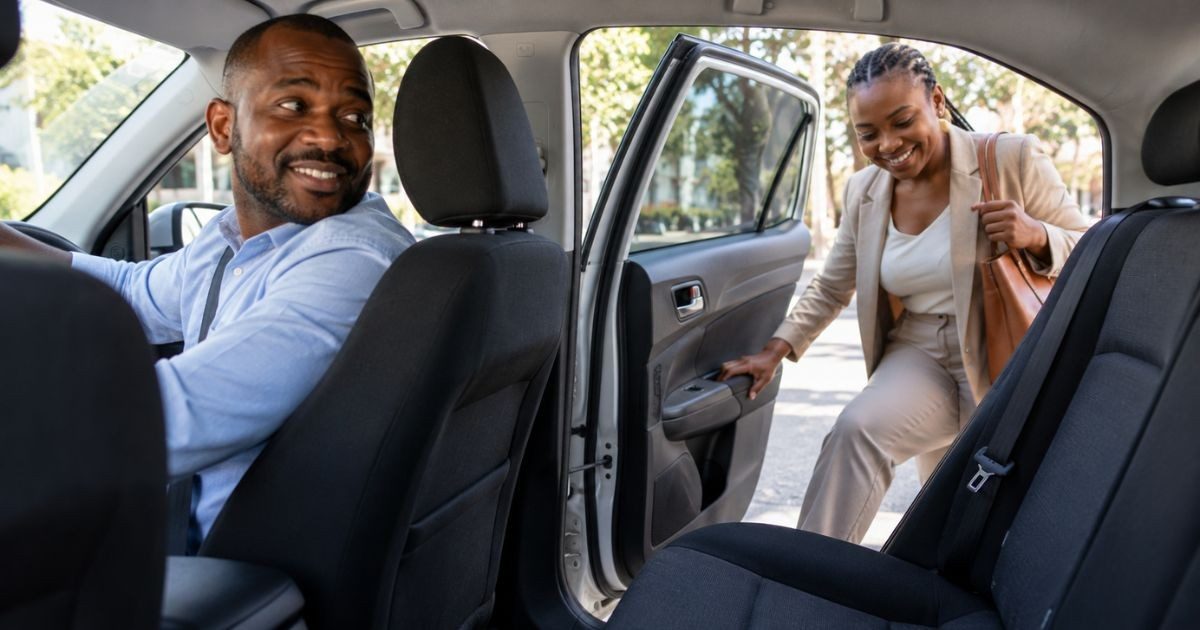
Uber car insurance South Africa questions almost always seem to come from one common mistake people make about their personal insurance policy covering them when driving for Uber. This guide will tell you why that’s not true, what kind of business insurance you need instead, and what would happen if you made a claim against the wrong insurance policy.
The Core Problem: Personal Car Insurance Does Not Cover Uber
Direct answer: Personal auto insurance policies in South Africa do not include any commercial use. Taking people for a fee using Uber is a commercial endeavor. Any claims made using personal insurance while working for Uber will be denied. It is a standard exclusion in virtually all South African personal motor insurance contracts.
This is the most important piece of information for any current or prospective Uber driver. The vehicle may be comprehensively insured under a personal policy, but the moment a trip is accepted on the Uber app, that cover becomes void for the duration of the commercial activity, regardless of how comprehensive or expensive the personal policy is.
Get the right Uber car insurance today
rather than relying on a policy that won’t actually pay out.
Personal vs Business Car Insurance: Side-by-Side Comparison
|
Factor |
Personal Car Insurance |
Business (E-Hailing) Car Insurance |
|
Covers Uber trips? |
No, commercial use is excluded |
Yes, commercial-use endorsement included |
|
Covers personal driving? |
Yes |
Yes if dual-use policy, or no if commercial-only |
|
Passenger liability? |
No |
Yes, core cover element |
|
App-on waiting period? |
No |
Yes, typically included |
|
Hijacking cover? |
Yes |
Yes |
|
Monthly premium (mid-range vehicle) |
R600 to R1,500 |
R800 to R2,500 |
|
Claim validity while on Uber trip |
Repudiated |
Valid |
What Business Car Insurance for Uber Must Include
Not all commercial vehicle policies automatically qualify as Uber-compliant cover. A policy must include all of the following to provide genuine protection for an Uber driver:
- Commercial-use endorsement: explicit confirmation in the policy wording that the vehicle is covered for commercial passenger-carrying activities.
- Passenger liability cover: covers the driver’s legal liability if a passenger is injured in the vehicle.
- App-on period cover: confirms cover applies while the driver is logged in to the Uber app and waiting for a trip request, not only during active trips.
- Comprehensive vehicle cover: collision, theft, hijacking, and fire cover for the vehicle itself.
Can I Add Uber Cover to My Existing Personal Insurance?
In most cases, no. Personal auto insurance cannot just add an entry about Uber to their policies. The coverage exclusion is fundamental; the policy itself is structured in such a way as to be priced for personal use only, with the business aspect of carrying passengers being fundamentally different.
There are some insurance providers that have developed a special rider for commercial use that can be added to particular personal policies, making them a hybrid of sorts between personal and commercial insurance policies. If you’re considering this:
- Request confirmation in writing that the endorsement explicitly covers e-hailing activities.
- Confirm that passenger liability cover is included in the endorsed policy.
- Confirm that the app-on waiting period is covered.
- Get the insurer’s confirmation that a claim arising during an Uber trip would be valid under the endorsed policy.
Important: do not assume a commercial-use endorsement automatically covers all e-hailing activities. Confirm each element in writing before relying on it, since an endorsement that covers general commercial use does not necessarily extend to passenger-carrying specifically.
Compare e-hailing insurance quotes now
and see the actual numbers for your own vehicle.
What Happens If You Drive Uber on Personal Insurance and Have an Accident?
Consider this scenario: a driver with personal comprehensive insurance accepts an Uber trip, is involved in a collision, and submits a claim. The insurer’s claims assessor identifies from the trip records or GPS data that the vehicle was being used commercially at the time of the incident.
The likely outcomes are consistently unfavourable for the driver:
- Vehicle damage claim: repudiated. The driver pays for repairs or replacement from personal funds.
- Third-party liability claim from the other driver: the insurer may also decline this, leaving the driver personally liable for the other party’s damages.
- Passenger injury claim: no cover exists under a personal policy. The driver is personally liable for medical costs, loss of earnings, and general damages claimed by the injured passenger.
- Uber platform consequence: Uber requires drivers to hold valid commercial insurance. Driving without it is a breach of the platform agreement and can result in account deactivation.
Dual-Use Policies: Covering Both Personal and Uber Trips
Some specialist e-hailing insurers in South Africa offer dual-use policies that cover the vehicle for both personal use and commercial e-hailing activities under a single premium. These are particularly relevant for part-time Uber drivers who use the same vehicle for personal and professional purposes.
Key features of a dual-use e-hailing policy typically include:
- Personal use covered at all times the app is off.
- Commercial e-hailing cover activates when the app is turned on.
- Passenger liability included during app-on periods.
- A single premium rather than separate personal and commercial policies.
Ask specifically about dual-use pricing when comparing e-hailing insurance quotes if the vehicle is used for both personal driving and Uber, since this is not always volunteered upfront by every insurer.
How to Switch from Personal to E-Hailing Insurance
- Contact your current insurer and confirm whether they offer a commercial e-hailing endorsement or dual-use product.
- If not, get insurance estimates for e-hailing through Get Business Insurance.
- Ensure that the new insurance covers commercial use endorsement, passenger liability coverage, and app-on period.
- Get the new insurance to be effective on the same day that the old insurance lapses.
- Lapse the personal insurance in writing after the requisite notice period.
- Confirm the new cover is active before the next Uber trip.
Important: do not cancel personal insurance before the e-hailing policy is confirmed active. A gap in cover, even of one day, means the vehicle is uninsured entirely during that period.
Ready to make the switch properly?
Switch to proper Uber cover today.
Frequently Asked Questions
Can I use personal car insurance for Uber if I only do a few trips per week?
No. The exclusion for commercial use applies regardless of how many trips are driven. Even one Uber trip on a personal policy is enough to void cover for the duration of that commercial activity, and the trip data insurers can access makes this exposure easy to identify at claim time.
Will my insurer know if I am driving for Uber on a personal policy?
Often, yes. They will require information about your travel history, GPS data log, and even platform verification while processing your claim. Uber monitors whether your car has been logged in through their application, which can be made known to them without your knowledge. It is risky to assume that your activities are unknown to the insurer.
Does e-hailing insurance cover me when I am not on an Uber trip?
This depends on the policy structure. If you have a dual-use policy, it provides personal coverage off the ride and commercial coverage on the ride. If you have a commercial-only policy, it won’t provide any coverage in personal mode. Check what type of structure you have.
Is there a way to keep my personal insurance and add Uber cover on top?
Sometimes via a special commercial use endorsement, provided by certain insurance companies, but again not every insurer does it, and it needs to be verified in writing that it provides coverage for e-hailing business.
What documents do I need to switch from personal to e-hailing insurance?
Usually include proof of identity, driver’s license, Professional Driving Permit, vehicle registration, roadworthiness certificate, and proof of Uber driver registration. This may vary somewhat between different insurers, but should be confirmed when getting a quote.
Last reviewed: August 2026. This guide is reviewed periodically to reflect current South African insurance and road traffic regulation. Commercial use and PDP requirements fall under the National Road Traffic Act, and current requirements are set out on the South African Government’s driving licence page. Insurance conduct, including the Insurance Act 18 of 2017, is regulated by the FSCA.
This article is part of our complete e-hailing insurance guide for Uber and Bolt drivers. For a full breakdown of cover types, see our Uber insurance cover guide, for typical pricing see how much e-hailing insurance costs, and for the full application process see how to get e-hailing insurance. For a compliance checklist, see Uber insurance requirements.




0 Comments