

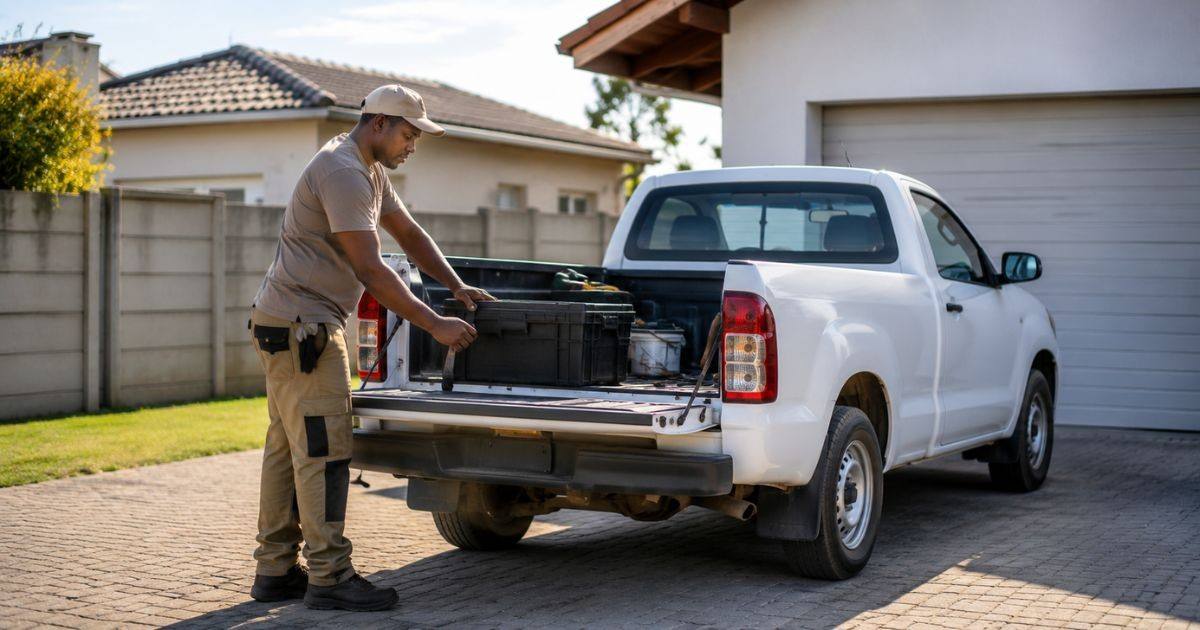
Getting a business vehicle insurance online quote in South Africa will only take a few moments, provided that you understand one important difference that many business people get wrong: personal car insurance cannot be used interchangeably with business vehicle insurance, even if the vehicle and the person driving the vehicle are the same. The guide begins with this important difference and moves on to discuss the various types of business vehicle insurance available, what details will speed up your quotation process, the application process, and more.
Get a business vehicle insurance quote
if any of your vehicles are used for business purposes.
Personal vs Business Vehicle Insurance: The Core Difference
This is the single most important concept in this guide, and it is worth understanding properly before comparing any quotes, since it determines which product category you should even be looking at.
Personal vehicle insurance policies do not cover any commercial use. Any vehicle being used to generate income or that is being used to carry cargo for commercial purposes or that is transporting passengers for commercial purposes needs a commercial-use endorsement. Claims made under a personal policy while the vehicle is being used commercially will be repudiated, regardless of how long the policy has been paid up without incident, and regardless of how the accident itself happened.
|
Personal Car Insurance |
Business Vehicle Insurance |
|
Covers private use only |
Covers commercial use and private use where specified |
|
Excludes income-generating activities |
Includes commercial-use endorsement |
|
Suitable for personal travel |
Required for any vehicle used in business operations |
|
Named driver or open driver options |
Any-driver cover available on fleet policies |
|
Standard personal excess |
Commercial excess applicable |
Types of Business Vehicle Insurance in South Africa
Business vehicle insurance is really an umbrella term covering several distinct products, and picking the right one matters as much as picking the right insurer.
- Commercial vehicle insurance (single vehicle): a standalone policy for one business vehicle. Provides comprehensive commercial cover for a single bakkie, van, or car used for business.
- Fleet insurance (multiple vehicles): a single policy that covers two or more company cars. Offers driver cover regardless of who drives, a single renewal period, and cheaper vehicle premiums depending on the number of cars in the fleet.
- E-hailing insurance: a specialized policy for Uber, Bolt, and others like them. It provides coverage for liability to passengers and for the app-on period.
- Goods in transit cover: covers cargo rather than the vehicle itself. Required for businesses that transport goods or stock in business vehicles.
What Information You Need to Get a Business Vehicle Insurance Quote Online
The list below covers most of what an insurer needs to price a policy accurately on the first attempt, rather than needing a follow-up call to fill in gaps:
- Vehicle make, model, year, and current retail value for each vehicle.
- Vehicle registration number and VIN.
- Whether the vehicle is financed and the name of the finance house.
- Primary driver details: age, licence class, years licensed, and claims history.
- Business use description: type of use, area of operation, and approximate annual mileage.
- Overnight storage location and security measures.
- Whether any-driver cover is required.
- Whether goods in transit cover is needed.
Having this information ready before starting the quote process ensures the quote is accurate and turnaround is fast, rather than needing a follow-up call to fill in the gaps or resubmit part of the application.
Compare business vehicle insurance now
across multiple FSCA-registered insurers in one place.
How to Get a Business Vehicle Insurance Quote Online
- Go to Get Business Insurance and select Business Vehicle Insurance or Fleet Insurance
- Enter vehicle details for each vehicle to be covered
- Enter driver details and business use description
- Select cover type: comprehensive, third-party fire and theft, or third-party only
- Compare quotes from multiple FSCA-registered commercial vehicle insurers
- Review each quote: premium, excess, key inclusions, and exclusions
- Accept the preferred quote and complete the application
- Receive policy documents and cover note by email
What to Check Before Accepting a Business Vehicle Insurance Quote
The cheapest quotation does not necessarily represent the best quotation. Here are the five things to look out for that distinguish a good-looking quotation from an insurance policy that will pay out in case of claims:
- Endorsement for commercial use: make sure that the policy provides coverage for the intended use of the vehicle. The endorsement varies depending on whether the commercial use is general, goods-carrying, or passenger-carrying.
- Agreed value versus market value: an agreed value policy provides a fixed amount in case of total loss. The market value policy will pay out the market value of the vehicle at the time of the claim, which tends to decrease with the age of the vehicle.
- Provisions for any driver: where applicable, make sure that there is coverage for any driver and that there are no limitations regarding age or experience.
- Territorial limits: confirm the policy covers the areas where the vehicle operates, including cross-border cover if required.
- Roadside assistance: some commercial vehicle policies include roadside assistance. Confirm whether it is included or excluded.
How Quickly Can You Get Business Vehicle Insurance?
For a single commercial vehicle with a straightforward use profile, business vehicle insurance can be quoted and activated within 24 to 48 hours of a complete online application. In case of fleet insurance for three or more cars, there may be a need for an extra day for the underwriter’s check, especially when the fleet comprises expensive or heavy commercial vehicles. Coverage will take effect on the stipulated effective date only after accepting the cover, and therefore it is advisable to consider making an application closer to when the vehicle will start being used.
Ready to get your vehicle properly covered?
Get a business vehicle insurance quote today.
Frequently Asked Questions
Is business vehicle insurance more expensive than personal car insurance?
Generally, yes, since business use carries higher risk than personal use: more time on the road, more variables in who is driving, and greater financial consequences from an accident or theft. The difference reflects a genuinely different risk profile rather than an arbitrary markup, and it is the same reason commercial cover exists as a distinct product category in the first place.
Can I add my business vehicle to my existing personal car insurance policy?
No, not in a way that provides valid cover. Personal car insurance policies exclude commercial use by definition, so adding a business-use vehicle to a personal policy without a commercial-use endorsement leaves that vehicle effectively uninsured for business activities, even though the premium is still being collected and the policy still appears active on paper.
Does business vehicle insurance cover my personal use of the vehicle?
Often, yes, many business vehicle policies include personal use alongside business use, but this should be confirmed explicitly rather than assumed. Some policies price personal use separately or require it to be declared upfront.
What is agreed value cover for a business vehicle?
Under the agreed value policy cover, the amount of money that will be paid out in case of total loss of the vehicle will be pre-established at the beginning of the policy agreement between the insurance company and the business. This would help in providing greater certainty, especially for vehicles which have high depreciation or cannot be valued accurately.
Can I get business vehicle insurance for a vehicle registered in my personal name?
Yes, normally it is possible. What really counts for coverage is the usage of the car, and not who its owner is registered as. The fact that a vehicle registered in your name is used for business implies that it requires a commercial-use endorsement or a special business vehicle insurance policy, while the fact that the car is registered under your name will just be noted on the application form.
Last reviewed: August 2026. This guide is reviewed periodically to reflect current South African insurance and road traffic regulation. Driver licence requirements fall under the National Road Traffic Act, and current requirements are set out on the South African Government’s driving licence page. Insurance conduct, including the Insurance Act 18 of 2017, is regulated by the FSCA.
This article is part of our complete fleet insurance guide for South African businesses. For multiple vehicles, see our business fleet insurance guide and truck fleet insurance guide. If you drive for Uber or Bolt, see our e-hailing insurance guide. See our About page or Privacy Policy.




0 Comments